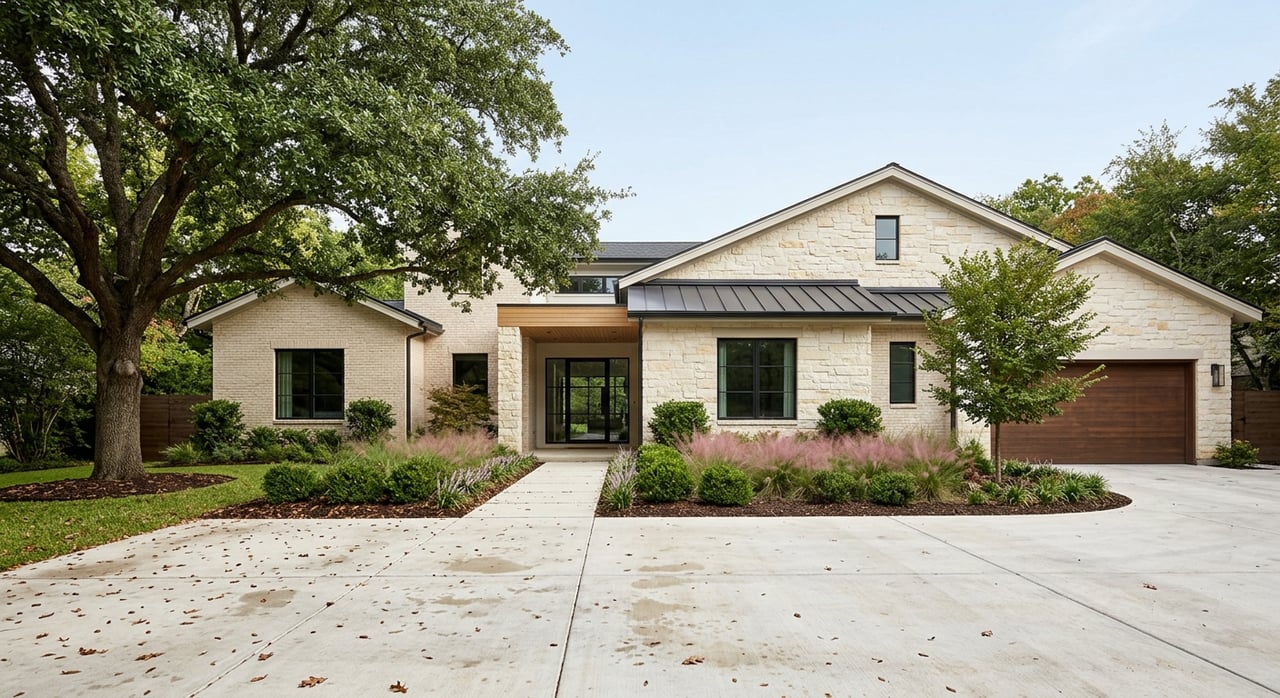
Explore Richardson TX Neighborhoods for Design-Focused Living
July 2, 2026
July 2, 2026
If you love architecture, curb appeal, and the feeling of a home that has been thoughtfully updated, Richardson deserves a closer look. For many buyers, the challenge is not finding a house at all. It is finding a neighborhood where good design feels natural to the block, not forced onto it. This guide will help you understand which Richardson neighborhoods best match your design preferences, what kinds of homes you are likely to see, and where renovation and reinvestment are already part of the local pattern. Let’s dive in.
Richardson stands out because it is an established city with limited undeveloped land and a large share of homes built in the 1970s. That mix tends to create a very specific opportunity for buyers who appreciate design: older homes with character, mature trees, and real potential for renovation, infill, or rebuilds.
The city also actively supports reinvestment in older areas. Richardson offers programs that reward facade, landscape, lighting, infill, and tear-down or rebuild projects, which helps explain why so many neighborhoods feel refreshed without losing their original identity.
Another important factor is neighborhood standards. The city says more than 95% of the community is represented by neighborhood or homeowner associations, and those groups can enforce standards beyond city ordinance. If exterior details matter to you, that can be a meaningful part of the buying decision.
Richardson also brings together form and function in a practical way. With more than 900 acres of parks and trails and four DART stations, you are not choosing between design appeal and everyday convenience.
If your taste leans toward classic ranch lines, mature trees, and thoughtful updates, central Richardson is a strong place to start. This group includes Richardson Heights, Heights Park, Arapaho Heights, Cottonwood Heights, and The Reservation.
These neighborhoods are the classic Richardson design canvas. You will commonly find 1950s and 1960s ranches, split-level homes, and other mid-century forms on modest but usable lots. Public listings in Heights Park show lots around 7,300 to 8,800 square feet, Richardson Heights around 7,500 to 9,800 square feet, and Arapaho Heights around 8,000 to 8,900 square feet.
What makes these areas especially appealing is the pattern of reinvestment. The strongest examples often keep the original scale of the home while improving windows, doors, landscaping, and overall exterior presentation. That tends to create a streetscape that feels layered and authentic rather than overbuilt.
For buyers who appreciate preserved mid-century character, Heights Park and parts of Richardson Heights are especially compelling. The city has even noted that the new Heights Recreation Center was designed to fit the surrounding mid-century modern architecture, which says a lot about how strongly that design identity still shapes the area.
This is often where you will see homes that respect their original massing while gaining a cleaner, more current look. If you like the idea of a ranch home with updated finishes and stronger curb appeal, these neighborhoods offer a practical starting point.
Arapaho Heights and Cottonwood Heights carry a similar design language, with mature trees and mostly one-story or one-and-a-half-story homes. In Cottonwood Heights, public listing examples show lots around 8,700 to 10,900 square feet, giving you a bit more breathing room in some cases.
The local update pattern here tends to be measured and tasteful. City revitalization awards show painted brick, modern window arrangements, new doors, and wood porch columns that refresh the homes without changing the scale that gives these streets their charm.
The Reservation feels a bit different from the rest of this central group. Listings describe curving cul-de-sacs, mature shade trees, and lots around 8,100 to 10,400 square feet, which can create a more custom feel within an older Richardson setting.
For a design-focused buyer, this is one of the most interesting pockets to watch. City award materials show both rebuilds and careful renovations, making it a strong fit if you want an established neighborhood but are open to a more curated modern or transitional result.
If you want the broadest architectural range in Richardson, Canyon Creek is hard to ignore. The homeowners association says the community includes roughly 2,850 single-family homes and offers a village-style feel with trails, creeks, parks, mature trees, local shops and restaurants, and the Canyon Creek Country Club.
The lot sizes are one of the biggest draws for design-minded buyers. Public listing data shows many lots in the roughly 0.27 to 0.43 acre range, with some larger parcels around 0.64 acres. That extra space can support more ambitious exterior design, additions, outdoor living, and layered landscaping.
Just as important, Canyon Creek is not tied to one narrow architectural identity. City revitalization awards show 1960s ranch homes transformed into California contemporary, Craftsman, bungalow, modern-traditional, and two-story contemporary forms.
Canyon Creek works especially well if you want options. You may prefer a classic ranch with room to refine over time, or you may want a larger lot that supports a more dramatic redesign.
Based on the public examples, this is the neighborhood that gives a design-lover the widest stylistic range without leaving Richardson. If flexibility is high on your list, Canyon Creek should be near the top.
Some neighborhoods are defined mainly by the houses. Prairie Creek is shaped just as much by the land around them. That difference matters if your idea of great design includes views, trees, trails, and homes that feel connected to the outdoors.
Prairie Creek Park is a 37.25-acre park, and the city has designated it a Lone Star Legacy park. The West Prairie Creek project also called for landscape restoration, tree planting, and new trail connections, which reinforces the area’s greenbelt identity.
The housing stock reflects that setting. Public listings in Prairie Creek Meadows show lots from about 9,500 square feet to 14,800 square feet and about 0.28 to 0.43 acres, with homes mainly from the 1970s.
Prairie Creek is one of Richardson’s best matches for buyers who want a more modern or contemporary direction with strong outdoor-living potential. City award examples include a demolished 1969 ranch replaced by a California-style contemporary home, a 1970s home facing Prairie Creek Park transformed with new landscaping, and a modern-traditional two-story with a full-length front porch.
The common thread is not one single style. It is the way architecture and landscape work together. If that relationship matters to you, Prairie Creek deserves close attention.
University Estates and University Estates North offer a different kind of appeal. On the east side of Richardson, these neighborhoods tend to feel quieter and more settled, with a stronger ranch-centered baseline.
Public listings on University Drive show roughly 8,400 to 8,600 square foot lots and one-story ranch homes from around 1970 to 1973. Descriptions also emphasize mature shade trees and a well-established setting with access to nearby golf, swim and tennis, and trails.
This is not typically where you look for dramatic stylistic reinvention. Instead, the strongest design moves are often subtle and disciplined.
City revitalization awards in University Estates North highlight updates such as improved stoop detailing, new front doors, lanterns, and architectural landscaping. That tells you a lot about the neighborhood rhythm.
If you appreciate classic homes and believe restraint can be just as powerful as a major transformation, University Estates may be a strong fit. Here, careful refinement often matters more than dramatic change.
If you are trying to narrow your search, it helps to think first about your preferred design direction.
Canyon Creek and Prairie Creek are the clearest matches for modern or contemporary buyers. Public examples in both areas show some of Richardson’s most successful contemporary rebuilds and larger-lot redesigns.
The Reservation can also fit this style if you want a custom-feeling modern home in an established neighborhood setting.
Richardson Heights, Heights Park, Arapaho Heights, Cottonwood Heights, and University Estates are especially strong for transitional updates. The most successful homes in these areas usually keep the original massing and then improve the windows, roofline details, landscaping, and overall finish level.
For many buyers, this balance feels especially livable. You get character and warmth without sacrificing a cleaner, more current look.
If preservation matters most, Heights Park and parts of Richardson Heights stand out. Original ranch character and mid-century scale still shape the streetscape, which makes these neighborhoods especially appealing for buyers who want to honor that design language.
In a design-driven search, the house is only part of the story. In Richardson, neighborhood and homeowner associations can matter quite a bit because they may impose exterior standards beyond city ordinance.
That means it is smart to look beyond finishes and floor plans. If you are considering a renovation, exterior update, or future rebuild, pay attention to the expectations that may shape what you can do.
It also helps to think in terms of neighborhood patterns. In some pockets, subtle upgrades are the norm. In others, more ambitious reinvestment and tear-down or rebuild activity are already part of the local culture.
When you understand that context, you can buy with a clearer sense of what fits the block and where your design goals have the best long-term alignment.
If you want help finding a Richardson neighborhood that matches your design eye, renovation goals, or interest in custom opportunities, 23 Lux Collection brings real estate, design perspective, and development insight together under one roof.