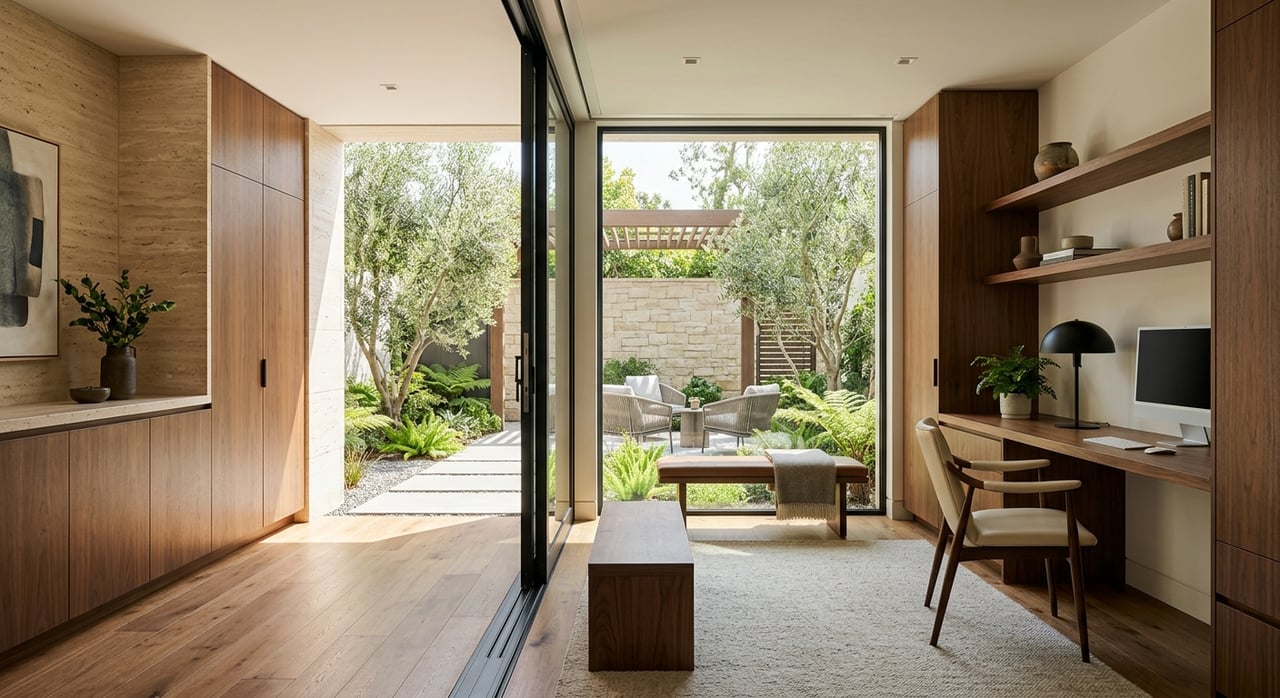
Choosing Between Townhome, Single-Family, Or Custom In Richardson
May 28, 2026
May 28, 2026
If you are choosing between a townhome, an existing single-family home, or a custom build in Richardson, you are not just picking a floor plan. You are deciding how much maintenance you want, how much privacy matters to you, and how involved you want to be in the home itself over time. In a city where much of the housing story is shaped by reinvestment, infill, and redevelopment, that choice can look very different than it would in a newer suburb. Let’s dive in.
Richardson is a mature first-tier suburb with limited undeveloped land. That means many housing opportunities are tied to established neighborhoods, redevelopment, and infill rather than large new subdivisions.
The city has identified several Enhancement Areas for study and reinvestment, including West Campbell, West Arapaho, West Spring Valley, Belt Line/Bowser, and Belt Line/Plano. Mixed-use settings already exist in places like Brick Row, Eastside, and AMLI Galatyn Station, which helps explain why housing choices here are often tied to location, transit access, and redevelopment patterns.
Before you compare square footage or finishes, it helps to define what daily life should feel like in your next home. The right answer usually becomes clearer when you think about upkeep, privacy, timing, and flexibility.
A practical way to frame the decision is to ask yourself a few key questions:
Townhomes in Richardson are often tied to infill, mixed-use, or transit-adjacent locations. The city’s mixed-use inventory includes Brick Row next to the Spring Valley DART station, and planning documents also show a proposed Richardson Townhomes project on Shiloh Road.
Richardson’s townhome zoning also gives some structure to what this housing type looks like locally. In the city’s RA-1100-M district, a townhome unit must be at least 1,300 square feet, excluding garages and breezeways, and no more than six units may be attached in a single building.
In practical terms, townhomes tend to appeal to buyers who want a more compact footprint and lower exterior maintenance exposure. Because Richardson notes that HOAs often enforce standards, reduce some ownership maintenance responsibilities, and may require dues and design compliance, the townhome choice is often also a choice about shared rules and governance.
That tradeoff can work well if you care more about convenience and location than about having a large yard or maximum separation from neighbors. In Richardson, that tends to be especially relevant in more connected, mixed-use settings.
Townhomes often make sense for busy professionals, frequent travelers, and downsizers who want a simpler exterior-maintenance routine. They can also be a strong option if you want to stay close to activity centers or transit-oriented areas.
If your priority is ease and efficiency, a townhome may feel like the most natural fit. If your priority is autonomy and outdoor space, you may want to look harder at detached options.
Richardson’s detached housing stock is rooted in established neighborhoods with long-standing community identity. City materials reference neighborhoods and HOAs such as Canyon Creek, Cottonwood Creek, Richardson Heights, and Estates of Prairie Creek.
The city’s revitalization examples show how important these neighborhoods are to Richardson’s housing landscape. Award examples include remodeled homes from the 1960s, teardown-and-rebuild projects, and updated homes in areas like Canyon Creek and Prairie Creek.
Existing single-family homes usually offer the strongest mix of privacy, yard space, and flexibility to make changes over time. If you want more control over your outdoor space, more separation from neighbors, or room to phase updates as your budget and needs evolve, this category often gives you the broadest range.
That said, more control usually comes with more responsibility. Richardson regulates many common exterior and property projects through its residential permit process, including fences, accessory buildings, roof work, room additions, patio enclosures, patios, and pools.
One advantage of buying an existing home in Richardson is that the city clearly supports reinvestment in established neighborhoods. Through the Home Improvement Incentive Program, eligible single-family projects may include additions, façade improvements, landscaping, interior remodels, kitchen and bathroom updates, painting, and flooring.
For buyers who see potential in an older home, that matters. It reinforces the idea that in Richardson, value is often created by improving existing housing rather than waiting for large-scale new subdivision inventory.
Detached homes often work well if you want privacy, more outdoor space, or the option to renovate over time. They can also be a smart fit if you love established neighborhoods and want a house you can personalize in phases instead of starting from scratch.
If you want the most day-to-day autonomy, this option usually gives you more of it. Just be honest with yourself about the upkeep and project management that can come with it.
In Richardson, custom building is usually a site-specific process rather than a subdivision-driven one. The city’s permit requirements for new single-family homes include a residential permit application, site plan, foundation plan, and energy code compliance report, and contractors must be registered before work begins.
Permit records also show that new detached homes are being built within older parts of the city, including on Cottonwood Drive and Glen Cove Drive. Paired with the city’s examples of teardown-and-rebuild activity in Canyon Creek and Prairie Creek, the local pattern is clear: custom opportunities in Richardson are often infill or replacement projects.
A custom home gives you the most control over layout, function, and finish level. If you know exactly how you want the kitchen to work, how the primary suite should live, or how the home should support your long-term plans, custom can offer a level of fit that resale often cannot.
The tradeoff is time and complexity. A custom build usually means more approvals, more coordination, and a longer path from idea to move-in.
Custom builds often suit move-up buyers, design-driven households, and long-term owners who care most about getting the home exactly right. If you are willing to wait and want a highly tailored result, this path can be worth it.
In Richardson, it is especially relevant if you are open to older neighborhoods where teardown or infill opportunities may exist. The process is more involved, but the outcome can align closely with how you want to live.
If you are still weighing the options, this side-by-side view can help clarify the best fit.
| Home Type | Often Best For | Main Advantages | Main Tradeoffs |
|---|---|---|---|
| Townhome | Buyers who want convenience and lower exterior-maintenance exposure | Compact footprint, location advantages, HOA-managed standards | More HOA governance, less yard autonomy, less privacy |
| Existing Single-Family | Buyers who want privacy and room to improve over time | Yard space, flexibility, established neighborhoods | More upkeep, more maintenance, more project responsibility |
| Custom Build | Buyers who want exact layout and design control | Tailored living, new construction, long-term fit | More time, approvals, coordination, and complexity |
The best choice usually comes down to what you want your next five to ten years to feel like. If you want simplicity and a more lock-and-leave lifestyle, a townhome may be the strongest fit. If you want space, privacy, and the freedom to improve gradually, an existing single-family home often makes the most sense.
If your priority is precision and long-term design fit, custom may be the right path, especially in a city like Richardson where infill and redevelopment play such a large role. The key is matching the home type to your real lifestyle, not just to what looks good on paper.
With Richardson’s mix of established neighborhoods, reinvestment activity, and site-specific new construction, there is no single best answer for every buyer. There is only the option that best supports how you want to live, maintain, improve, and grow.
If you want help thinking through the tradeoffs, identifying infill opportunities, or evaluating a home through both a real estate and design lens, 23 Lux Collection can help you navigate Richardson with clarity and intention.