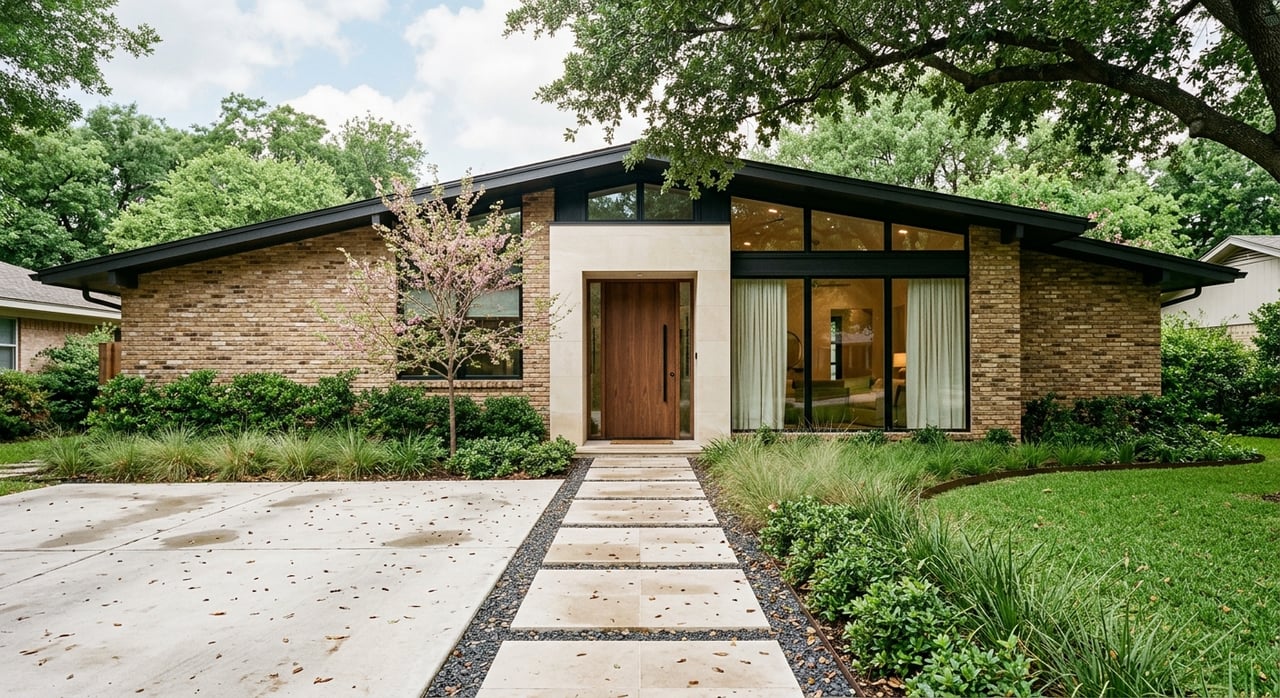
Richardson Mid Century Homes With Design Potential
April 2, 2026
April 2, 2026
If you have ever driven through Richardson and felt drawn to the clean rooflines, wide lots, and mature trees of its older neighborhoods, you are not imagining it. Richardson has a deep mid-century housing base, and many of these homes still offer the kind of layout, lot size, and architectural simplicity that make thoughtful updates especially rewarding. If you are wondering where to find that potential and how to modernize it without losing what makes it special, this guide will walk you through it. Let’s dive in.
Richardson’s mid-century housing stock is closely tied to the city’s postwar growth. The City of Richardson’s history overview notes that Central Expressway opened through the city in 1954, major employers like Collins Radio and Texas Instruments arrived in the 1950s, and residential growth continued booming through the 1970s.
That timing matters because it shaped the neighborhoods you still see today. Many homes were built during an era when one-story plans, attached garages, sliding glass doors, and central air were part of the suburban ideal. A Dallas County historical profile of Greenwood Hills describes this 1960s development pattern and highlights original features that still appeal to buyers looking for character and functionality.
Another reason Richardson stands out is consistency. Many neighborhoods kept their lot patterns, street rhythm, and mature tree canopy over time, which gives renovated homes a strong backdrop. That makes Richardson especially appealing if you value a home that can feel current inside while still fitting naturally into an established street scene.
Several Richardson neighborhoods have especially clear ties to mid-century design and postwar development. These are some of the most documented areas in the available local sources.
According to the Arapaho Heights Neighborhood Association, the neighborhood includes both newer homes and traditional mid-century homes across more than 1,100 households. That mix can make it appealing if you like the idea of architectural variety with a visible mid-century base.
These neighborhoods come up repeatedly in the city’s Community Revitalization Awards. Award examples reference late-1950s homes that were updated in ways that preserved their original character while improving curb appeal and function.
For buyers, that suggests a neighborhood where design-sensitive renovation already has a local track record. For owners, it offers real examples of how an older house can be refreshed without feeling out of place.
The city’s 2018 award recipients include a 1958 home in Cottonwood Heights, a 1960s Cottonwood Heights home, and a late-1950s home in Highland Terrace. These examples show that reinvestment in older housing is not isolated to one pocket of Richardson.
Canyon Creek stands out for the range of updates recognized by the city, including remodels, rebuilds, and additions to homes from the 1960s and 1970s. In the city’s award examples, you can see how owners have introduced more contemporary materials and layouts while keeping the home legible within the neighborhood.
Greenwood Hills is especially useful for understanding Richardson’s larger story. The Dallas County profile describes it as a 1960s suburban neighborhood that grew during Richardson’s broader postwar expansion. It also notes the value of mature original plantings, which continue to shape the feel of the area today.
The best Richardson mid-century homes often start with a few built-in advantages. Many sit on stable lots with mature trees, and many have simple massing that can be updated in clean, intentional ways.
That design potential is part of what makes them so appealing today. A straightforward roofline, a broad front elevation, and a connected indoor-outdoor layout can give you a strong architectural starting point. Instead of forcing a home into a style that does not fit, you often have the chance to work with the original structure.
In practical terms, that can mean better results from focused design choices. A reworked entry, updated windows, improved materials, and stronger landscape planning can dramatically change how the home lives and how it presents from the street.
Richardson’s strongest renovation examples tend to reinterpret older homes rather than erase them. The city’s 2017 revitalization award recipients show recurring design moves that feel fresh while still respecting neighborhood character.
Award-recognized projects often feature painted brick, cedar or stained-wood columns and cladding, updated front doors, cleaner entry sequences, and revised window arrangements. Some include second-story additions, but the most successful ones still let the original house read clearly.
That is an important distinction if you are planning a renovation. In many cases, a home feels more elevated when the addition looks intentional and balanced rather than oversized or disconnected from the original structure.
One of the most useful local design cues is to preserve or echo the original roofline. When owners add volume, the strongest examples tend to place it where the change feels integrated instead of abrupt.
This approach helps an older home feel modern without making it look generic. It also supports what many buyers already like about Richardson, which is the sense that homes belong to the block rather than competing with it.
The city’s recognized projects also show a smart use of newer materials in smaller, strategic doses. Standing-seam metal roof elements, wood slats, updated masonry, and clean window grids can all sharpen the look of a home.
The key is restraint. In Richardson, the best modernizations usually feel edited and site-aware, not overdesigned.
Some of the biggest visual improvements come from the approach to the home. New walks, larger porches, reworked entries, and stronger landscape structure often do as much for curb appeal as a larger construction project.
This matters if you are thinking about value, because first impressions are shaped long before someone steps inside. A home that feels inviting from the street often reads as more cohesive overall.
In Richardson, landscape is not just background. The city’s award examples repeatedly praise mature trees, native plantings, xeriscape elements, stone edging, and more open front-yard compositions.
That local pattern says a lot about what works here. Mature trees are part of the identity of many established Richardson neighborhoods, and preserving them whenever possible often strengthens the final design.
For owners updating an older home, this can be a smart reminder to think beyond the facade. A refined landscape plan can help a remodel feel more settled, more intentional, and better connected to the lot.
If you are considering a renovation or evaluating the long-term upside of an older home, Richardson offers a supportive local context. The city’s Envision Richardson Comprehensive Plan, approved on November 11, 2024, explicitly includes neighborhoods, housing, and reinvestment areas.
The city also offers a Home Improvement Incentive Program for single-family-zoned properties that commit to at least $20,000 in improvements within 24 months. On top of that, the city notes that the Community Revitalization Awards program has recognized 355 properties since 1994.
Taken together, those details reinforce an important point: in Richardson, updating older homes is not a fringe idea. It is part of an established neighborhood story shaped by reinvestment, design improvement, and respect for existing streetscapes.
If you are buying, Richardson’s mid-century neighborhoods can offer a compelling mix of character and potential. You may find homes with strong bones, larger lots, and room for thoughtful upgrades that support today’s lifestyle.
If you are selling, design quality matters. In neighborhoods where buyers can clearly see the difference between a generic update and a well-resolved one, the right improvements can strengthen presentation and help your home stand out.
This is where a design-aware approach becomes especially valuable. When acquisition, renovation thinking, and resale strategy are aligned, it is easier to make decisions that support both function and market appeal.
Whether you are searching for a home with renovation upside or considering how to position your current property, a local, design-led perspective can make the process much clearer. If you want guidance on Richardson homes, renovations, or opportunities with long-term potential, connect with 23 Lux Investments.