How to Evaluate Richardson Investment Property Renovation Potential
June 4, 2026
June 4, 2026
If you are looking at investment properties in Richardson, it can be easy to confuse a dated house with a true value-add opportunity. In this market, that difference matters. Buyers are still active, and well-planned updates can stand out, but expensive mistakes in zoning, drainage, or parking can quickly eat into your margins. This guide will help you spot the Richardson homes with real renovation potential and avoid the ones that look promising only at first glance. Let’s dive in.
Richardson sits in a mature North Dallas submarket with steady demand and a buyer pool that often values thoughtful updates. Public market trackers in the research report place average home values and median sale prices in the mid-$400,000 range, with homes typically selling in about a month to 40 days. That kind of activity can support renovation projects when the work is well matched to the home and location.
The city also has a strong reinvestment story. Envision Richardson, approved in November 2024, keeps a focus on enhancement areas and transit-oriented development near DART rail stations. For you as a buyer or investor, that means some pockets may benefit from a stronger long-term demand narrative, even when the home itself still needs work.
Before you think about finishes, start outside. In Richardson, renovation potential often begins with the parcel itself. A usable lot can create options for additions, better outdoor living, garage improvements, or a cleaner site layout.
Richardson uses multiple residential zoning districts, so parcel-specific verification matters. The city’s Zoning Atlas and Comprehensive Zoning Ordinance are the first places to confirm what is allowed. You do not want to assume that what worked on one block will work on the next.
In the R-1500-M single-family district, the city lists a minimum lot area of 9,000 square feet, minimum width of 72 feet, minimum depth of 125 feet, lot coverage capped at 40 percent, a front setback of 30 feet, and a rear setback of 25 feet. That gives you a useful benchmark for evaluating whether a home has room to grow.
Certain physical traits tend to make a property more renovation-friendly:
These features do not guarantee an easy project, but they often give you more design options. For a team like 23 Lux Collection, where design and functionality go hand in hand, that flexibility can be the difference between a cosmetic update and a truly elevated transformation.
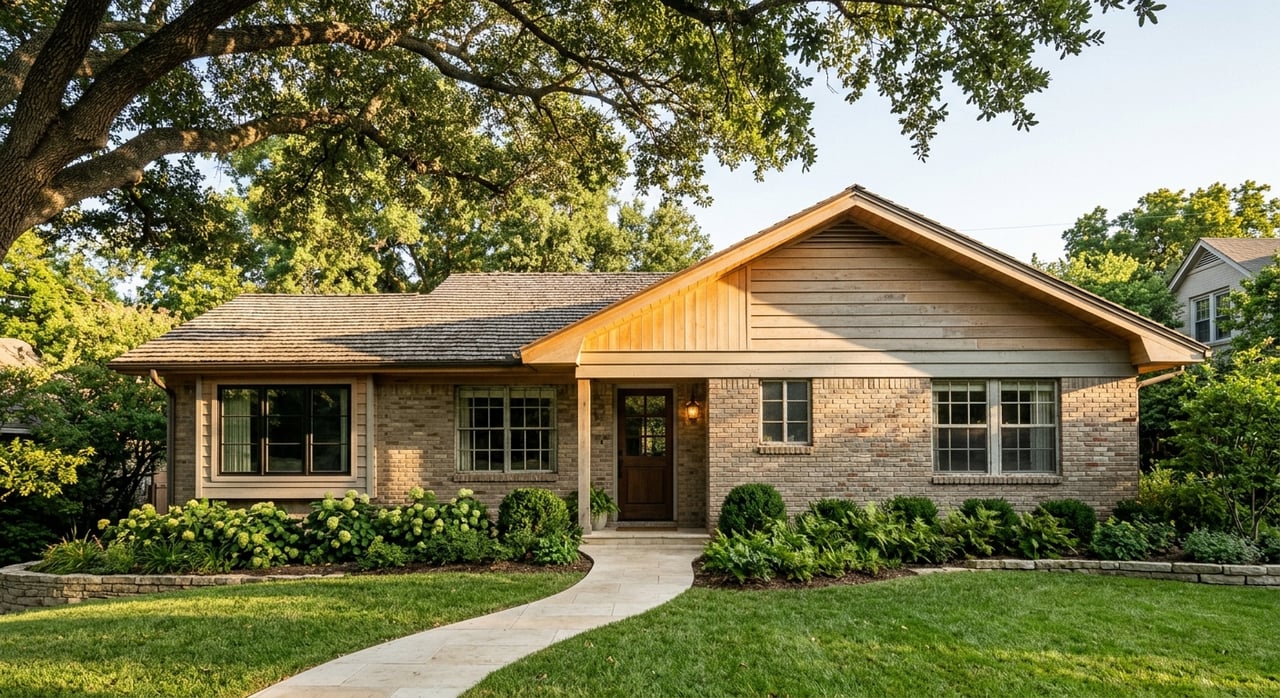
One of the best Richardson renovation candidates is often the house that looks tired but stable. That means an older floor plan, outdated finishes, or neglected style choices, but without signs of major structural or site trouble. Cosmetic obsolescence can often be fixed more predictably than drainage problems, chronic code issues, or unpermitted work.
At the street level, look for homes with a simple footprint and a layout that can be improved without forcing a full rebuild. Straight rooflines, logical room placement, and enough rear-yard depth can make additions or reconfigurations more feasible. These are often the homes where smart design creates the biggest visual and functional lift.
Richardson code enforcement also gives you clues about what the city watches closely. The city routinely focuses on exterior maintenance, fence condition, yard storage, vegetation, and roof condition. A tidy but dated property is usually a better candidate than a house with heavy deferred maintenance, parking on grass, open front-yard storage, or obvious exterior neglect.
As you walk a property, pay attention to:
These issues do not always kill a deal. They do mean you should underwrite more carefully and verify what is cosmetic versus what could trigger broader compliance or repair costs.
In Richardson, parking is not a minor detail. It can directly affect whether your renovation plan works. If you are considering converting a garage to living space, the city states that the project must still meet building and zoning codes while preserving two off-street parking spaces behind the front building line.
That requirement can change the math on a project fast. A layout that looks appealing on paper may become impractical if the site cannot support compliant replacement parking. Before you assume extra square footage will create value, confirm that the property can still function within the city’s rules.
Location still shapes the upside of a renovation. In Richardson, the city has explicitly identified reinvestment and redevelopment zones through its comprehensive planning. That does not guarantee appreciation, but it does give you a useful framework for spotting areas where public planning may support future private investment.
The city’s Enhancement Areas include the Main Street/Central Expressway Corridor, Collins/Arapaho Transit-Oriented Development and Innovation District, West Spring Valley, and Belt Line/Plano. Homes near these areas may benefit from stronger visibility, access, and buyer interest over time.
Richardson’s DART rail stations have been in place since 2002, and DART notes that rail and bus access attracted investors. Arapaho Center Station is also being redeveloped as part of the Richardson Innovation Quarter gateway. Add in the city’s emphasis on US 75 as a key commuter corridor, and you can see why homes with convenient access to rail, major roads, and mixed-use districts may appeal to a broader buyer pool.
If you are deciding between two similar renovation candidates, location efficiency can be a meaningful tie-breaker. A well-designed home that also fits everyday commuting patterns can have stronger resale appeal than a better-looking house in a less connected pocket.
Richardson is split between Richardson ISD and Plano ISD, depending on the property location. That means district boundaries should be verified for each address rather than assumed by city name alone. For resale planning, this is simply part of understanding how a home is positioned in the market.
The broader local profile also helps explain why renovated homes can perform well in the right pocket. Census data in the research report shows a median household income of $98,111, a 50.7 percent owner-occupied housing rate, and 57.0 percent of adults with a bachelor’s degree or higher. These figures suggest a stable, educated buyer pool that may respond well to quality improvements and functional design.
A renovation budget is only as reliable as your due diligence. Richardson’s Residential Construction page lists permit types commonly triggered by value-add projects, including foundation repair, interior remodels, roof repair or replacement, room additions or patio enclosures, fence construction, accessory buildings, and driveways. If your project needs plans, it cannot be handled through the city’s online miscellaneous-permit process.
The city also states that roof permits are required when repairing, recovering, or replacing 25 percent or more of the roof area. That matters if you are buying a home that needs broad exterior work. Seemingly simple updates can become more involved once permit requirements are part of the scope.
Before you finalize your underwriting, confirm:
This is where experience matters. A polished renovation starts long before finishes are selected. It starts with making sure the site, rules, and budget all support the vision.
Drainage is one of the easiest ways to underestimate a project. Richardson’s stormwater guide notes that the city has 12 drainage basins and warns owners not to alter a floodplain, stream bank, or creek bed without consulting the city. For you, that means homes near creeks, swales, low spots, or visible grading issues deserve extra scrutiny.
Flood maps should also be part of your review. Flood risk can change over time, and even homes outside the highest-risk areas can still have drainage challenges that affect rehab cost and resale confidence. A beautiful renovation does not erase a bad water story.
Use extra care when you see:
These homes are not automatic noes, but they should be reviewed with a sharper eye. Site conditions can add cost in ways that are harder to recover than interior design upgrades.
City approval is not the only layer of due diligence. Richardson notes that homeowner associations are governed by covenant or deed restrictions. So even if the city allows part of your plan, an HOA or neighborhood restriction may still limit what you can do.
This is especially important if your renovation includes exterior changes, fencing, additions, or accessory structures. Always confirm both city requirements and any private restrictions before you commit to a design path.
Richardson’s Home Improvement Incentive Program can be relevant if you are planning a larger remodel. According to the city, eligible projects must be in single-family zoned areas, cost at least $20,000, and be completed within 24 months. The incentive is tied to the increase in city taxes created by the improvement.
Not every project will qualify, and you should confirm the details early. Still, for the right property, this kind of local program can improve the economics of a major renovation and support a more thoughtful scope of work.
When you step back, the strongest renovation candidates in Richardson usually share a few traits. They have a usable lot, a clear zoning path, functional parking, and a location that connects well to daily life. They may be dated, but they are not fighting you on every front.
The most expensive mistakes usually come from the opposite profile. That includes floodplain or drainage exposure, garage or parking noncompliance, unpermitted structural work, or block-by-block restrictions that make the design hard to execute. In this market, good returns tend to come from clarity, not guesswork.
If you are evaluating renovation potential in Richardson, it helps to work with a team that understands not just resale, but also design, sourcing, and execution. That is where strategy gets sharper and decisions get easier. If you want a thoughtful second opinion on a property, renovation scope, or off-market opportunity, connect with 23 Lux Collection.